
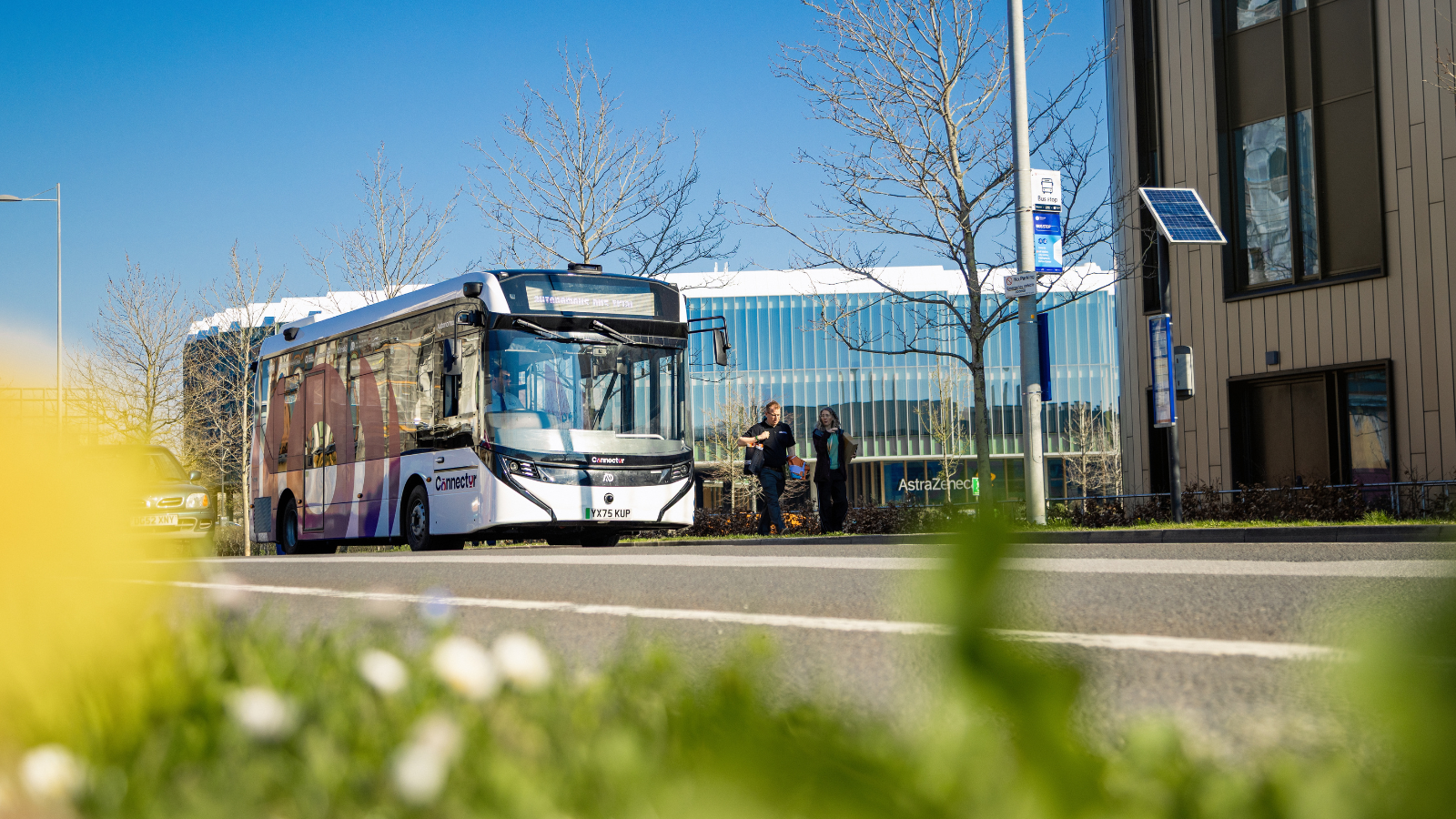
A study carried out as part of the Connector project will help shape the next generation of self-driving buses.
People taking part in research for Cambridge's self-driving bus project have highlighted the importance of ensuring services are designed around passenger need as the technology develops.
The research, carried out through the Greater Cambridge Partnership's Connector project, explored how people with a range of access needs feel about travelling on self-driving buses and what future services should look like.
While participants generally expressed confidence in the self-driving technology, many said they would still want a source of information, reassurance and support throughout the journey, including pick-up and drop-off.
The findings will help inform the next stage of the Connector project as it explores how self-driving buses can move from trial services to part of the future public transport network.
Self-driving buses have the potential to offer longer operating hours to services for communities that currently have limited transport options, as well as making roads safer by never getting tired or distracted. However, participants also said bus drivers provide support in ways that are often overlooked, from helping people navigate their journey to providing reassurance when something unexpected happens. Passengers expected these functions to be built into the design of self-driving buses, with clear routes to human support when needed.
The study involved 48 participants and used immersive virtual reality experiences, accompanied journeys and focus groups to explore how a self-driving bus service could be designed to work for everybody.
Dan Clarke, Head of Innovation at the Greater Cambridge Partnership, said:
“We know automated passenger services have so much to offer - from longer operating hours to services for communities that currently have limited transport options.
"But we also know that bus drivers do much more than drive. They provide reassurance, information and support. As autonomous services develop, we need to make sure those benefits are not lost. The next step for us is to move from proving the technology, to designing a service that people choose to use, by building in the support they need.”
Dr Clare Mutzenich, CEO of Anthrometric, said: “The real opportunity is not just teaching the bus to drive itself. It is designing a transport service that supports everyone equally, at every stage of the self-driving journey.”
The Connector project has been operating self-driving buses on routes serving Cambridge West and the Cambridge Biomedical Campus, carrying over 4,000 passengers since it started. The project recently secured a further £3.88 million in government funding to continue exploring the future of automated public transport.
Connector is being delivered by a consortium led by GCP, made up of Whippet, Fusion Processing, Alexander Dennis, dRisk and Anthrometric.